

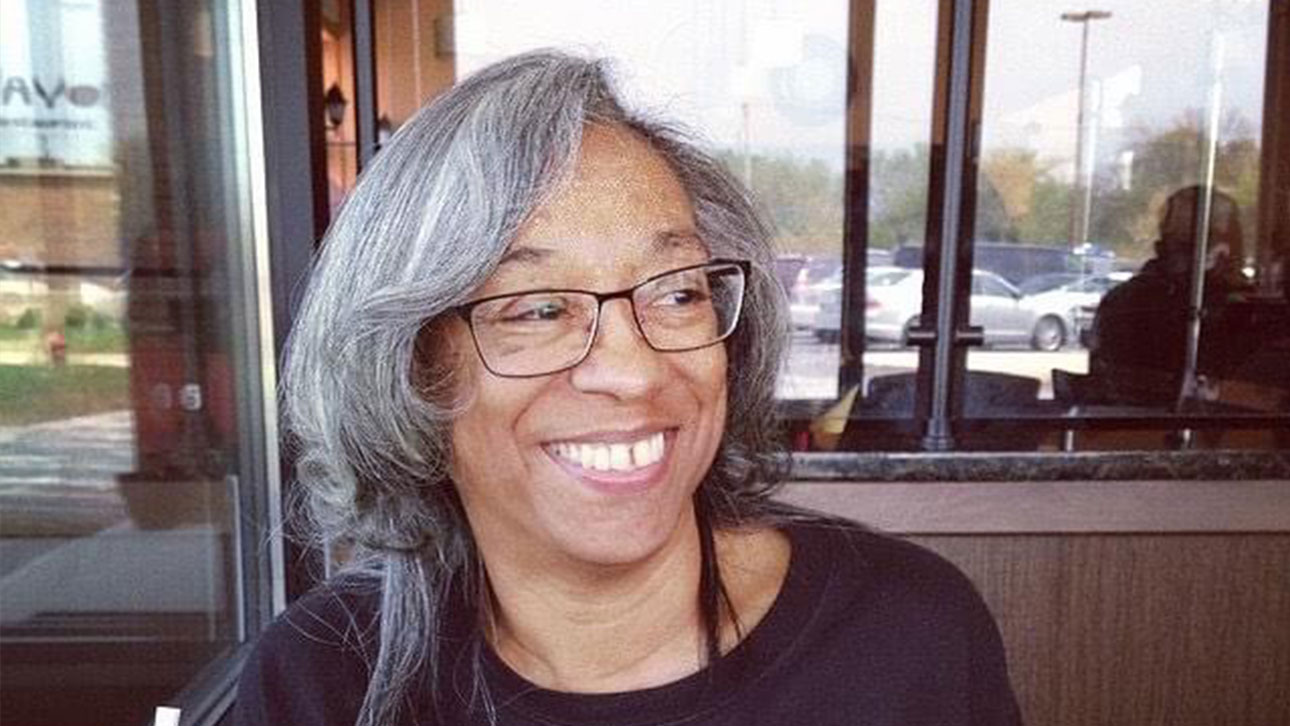
For more than 22 years, Monique Davis dedicated her career to child welfare, leading the only female adolescent sex offender inpatient residential program in Illinois. She was a seasoned clinician, deeply committed to helping vulnerable youth. But nothing prepared her for January 28, 2017, when her mother, Pamela Perkins, was diagnosed with stage 4 non-small cell lung cancer—on her 63rd birthday.
Monique remembers carrying her mother into the emergency room that day, blue-faced and struggling to breathe. “That morning changed everything,” she says. The oncologist gave them a prognosis measured in months. “But my mom looked at me and said, ‘We’re going to fight.’”
Those words became the rallying cry for her family and, ultimately, the name of her Walk for Hope team: We Fight.
A Daughter’s Journey Through Caregiving
Pamela chose treatment, determined to see her next birthday. And she did. Monique hosted a celebration filled with family, laughter, and photos. “What I didn’t realize,” Monique recalls, “was that my mom made sure I took a picture with every single person who came that day. It turned out to be her final gift to us.” Ten days later, Pamela passed away in Monique’s arms.
In the midst of heartbreak, Monique’s training as a therapist helped her family cope. But she also felt keenly what was missing. “The hospital cared for my mother, but they didn’t have the kind of supportive services families desperately need—counseling, caregiver support, someone to help process the fear, anger, and grief. I knew then my path was changing.”
Finding Purpose at City of Hope
By 2024, Monique joined City of Hope Chicago as a behavioral health therapist. “I’m here because of my mom,” she says. “Even though she didn’t get treated at City of Hope, I feel her here. What we offer – support for patients and caregivers – is rare, and it’s exactly what my family needed.”
Her role allows her to sit with patients and families in their most vulnerable moments. Sometimes she shares her story; sometimes she simply listens. “A cancer diagnosis brings so many emotions—fear, anger, guilt, even humor. Patients need a safe space to express it all. I tell them it’s OK to feel joy one day and despair the next. It’s OK for faith and fear to coexist.”
She also works extensively with caregivers, drawing from her own experience. “Caregivers carry so much,” she says. “My mom once tried journaling at a nurse’s suggestion, but she quit after two weeks. She wrote, ‘This is stupid. When I’m gone, you’ll just see how much I hated all of this.’ That’s real. Patients and families need someone to validate those feelings. That’s what I get to do now.”
Carrying Her Mother’s Spirit
Pamela’s influence is everywhere in Monique’s work. A photo of her hangs in Monique’s office. Small bells sit nearby, reminders of milestones yet to come. “My mom never got to ring the bell,” Monique says softly. “So now, when I meet new patients, I encourage them to ring it as a way of manifesting hope. I’ve seen patients with stage 4 cancer go on to become evidence-free. That reshapes the story I once believed about my mom’s diagnosis.”
Her commitment extends beyond the clinic. Each year, Monique rallies family and friends for Walk for Hope. In 2024, her team ranked among the top fundraisers, and she donated a grand prize for the event’s opportunity drawing. This year, she’s giving an even bigger prize. “For me, Walk for Hope isn’t just a fundraiser,” she says. “It’s how I honor my mom. She’s my why.”
Breaking Stigma, Building Connection
Monique also works to reframe how people view behavioral health. “The term still carries stigma. People hear ‘therapy’ and think something’s wrong with them. But at City of Hope, behavioral health means social work, caregiver support, naturopathic medicine, sexual health—it’s about whole-person care. And it’s included in your treatment.”
Sometimes, when patients are hesitant, Monique shares her mother’s story. “It helps them see me not just as a therapist, but as someone who’s been there. I’ve sat in their chair. I’ve lost someone I loved to cancer. That human connection opens doors.”
A Legacy of Love and Hope
Pamela Perkins spent nearly 40 years in banking, but to Monique, her greatest legacy was her resilience and faith. “She told me once, ‘Any doctor who keeps God at the forefront is where I want to be.’ That shaped how she chose her care—and how I see my role today. Science matters. But so does hope.”
That blend of hope and honesty guides Monique as she walks alongside patients and families. “I tell them: your choices are valid. If you want to fight, I’ll fight with you. If you choose to stop, I’ll support you in that, too. My job is to make sure you feel safe in whatever decision you make.”
Every day, Monique carries her mother’s words—We Fight—into her work. And every step she takes at Walk for Hope is a step for Pamela, for her patients, and for the belief that no one should face cancer alone.
“She’s the reason I’m here. The reason I walk. And the reason I fight.”