

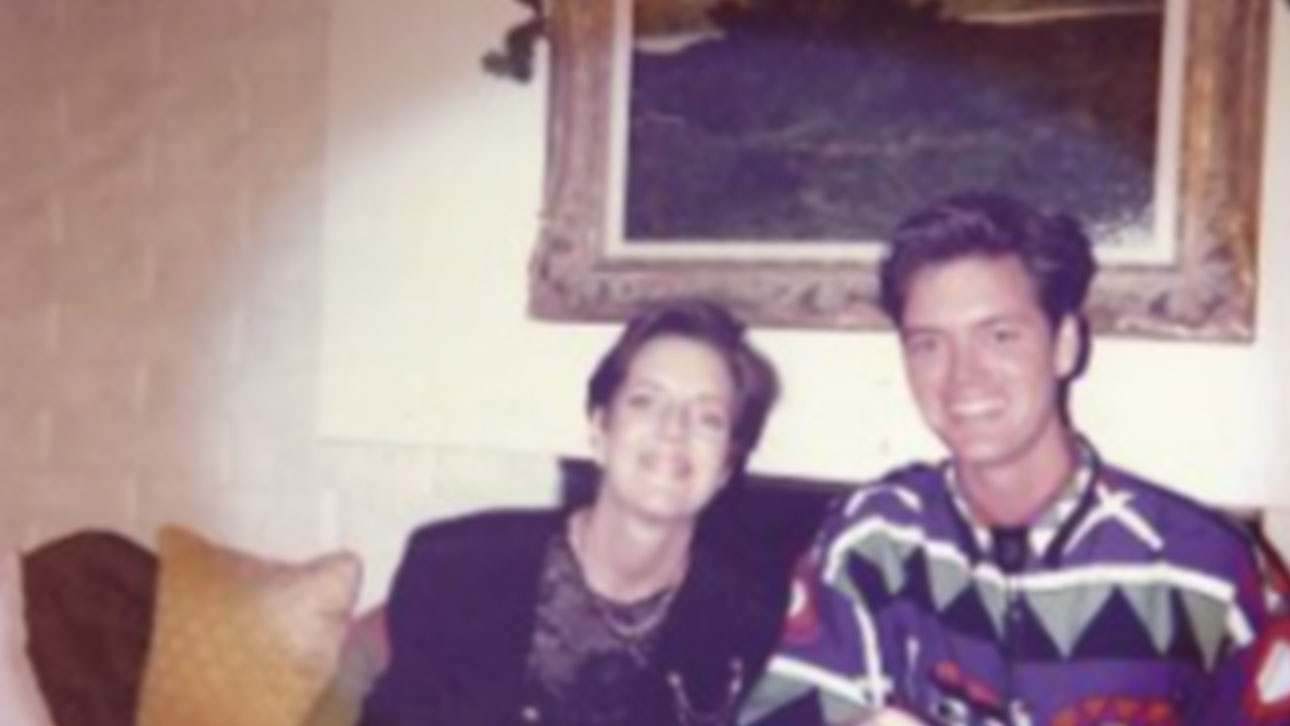
When Joe Ward takes his first steps at Walk for Hope, he carries with him a lifetime of memories — of a mother’s resilience, a sister’s courage, and the mission that ultimately reshaped his life.
Cancer has left an unmistakable mark on Joe’s family. “Three out of four grandparents. Both parents. Two uncles, an aunt, my brother and sister,” he shares with a mix of humor and honesty. “Yes, the Wards are overachievers.” But beneath that levity is a deep well of lived experience, the kind that forged Joe’s “why” long before he worked at City of Hope.
Joe was only 16 when his mother, Betty Lou, was diagnosed with a rare and aggressive oral cancer. What started as a simple dental visit turned into a life-altering surgery — the removal of most of her upper jaw. “She never smoked, never drank. She lived healthy. But cancer still came for her,” Joe recalls. Betty Lou, true to her no-nonsense personality, told her doctors, “You have one chance. Cut out whatever you need to, but I’m not doing radiation or chemo.”
The surgery was brutal, but it gave her decades more life. Betty Lou went on to live another 40 years, passing away at 89. For Joe, caring for her during those early days reshaped their bond. “It was the first time I saw her vulnerable, the first time I had to take care of her. It changed our relationship forever.”
Just a few years later, tragedy struck again. Joe’s sister, Tracy, was only 26 when she was diagnosed with stage 4 ovarian cancer. Without health insurance, she relied on philanthropy to cover her earliest treatments. Joe remembers overhearing a doctor at a local hospital say, “She’s dying anyway — why are we treating her?” It was a devastating moment.
Then came what Joe calls an angelic intervention: a City of Hope card placed in his hand by someone he can’t even recall. “The very next day, we were at City of Hope, sitting in a consultation room. They looked at Tracy, put all the available trials on a board, and asked, ‘What do you want to do?’ For the first time, she was in the driver’s seat.”
For three and a half years, Joe and his family fought alongside Tracy at City of Hope. He stayed overnight in her room, sat with her in the rose garden during infusions, and watched her find joy in borrowed time — attending their brother’s wedding, traveling, even laughing through moments of sickness.
Ultimately, Tracy passed away at 30. “She was my best friend,” Joe says. “Losing her changed everything for me.” In the wake of her death, Joe left behind a corporate PR job and pursued nonprofit work, eventually finding his calling in philanthropy and planned giving. “I needed to do something that would let me sleep at night,” he says.
Decades later, Joe finally joined City of Hope as part of its Office of Philanthropy — closing a circle that began with his family’s patient experience. “When I told my family, the reaction was pure elation,” he recalls. “City of Hope gave Tracy dignity, gave us time, gave us hope. Working here is my way of giving back.”
For Joe, Walk for Hope is deeply personal. He remembers walking the event with his mom and sister years ago, before either of them became patients. More recently, volunteering at the Orange County Walk rekindled that connection. “Every person who came up for a T-shirt wanted to tell me their story. Handing out carnations to survivors and families — it was one giant mission moment.”
This year, he’ll be walking again — not only for Betty Lou and Tracy, but for every patient and family who deserves a future free of cancer. “I walk in memory and with extreme pride of these two amazing, fierce individuals. Their examples changed me for good and forever.”